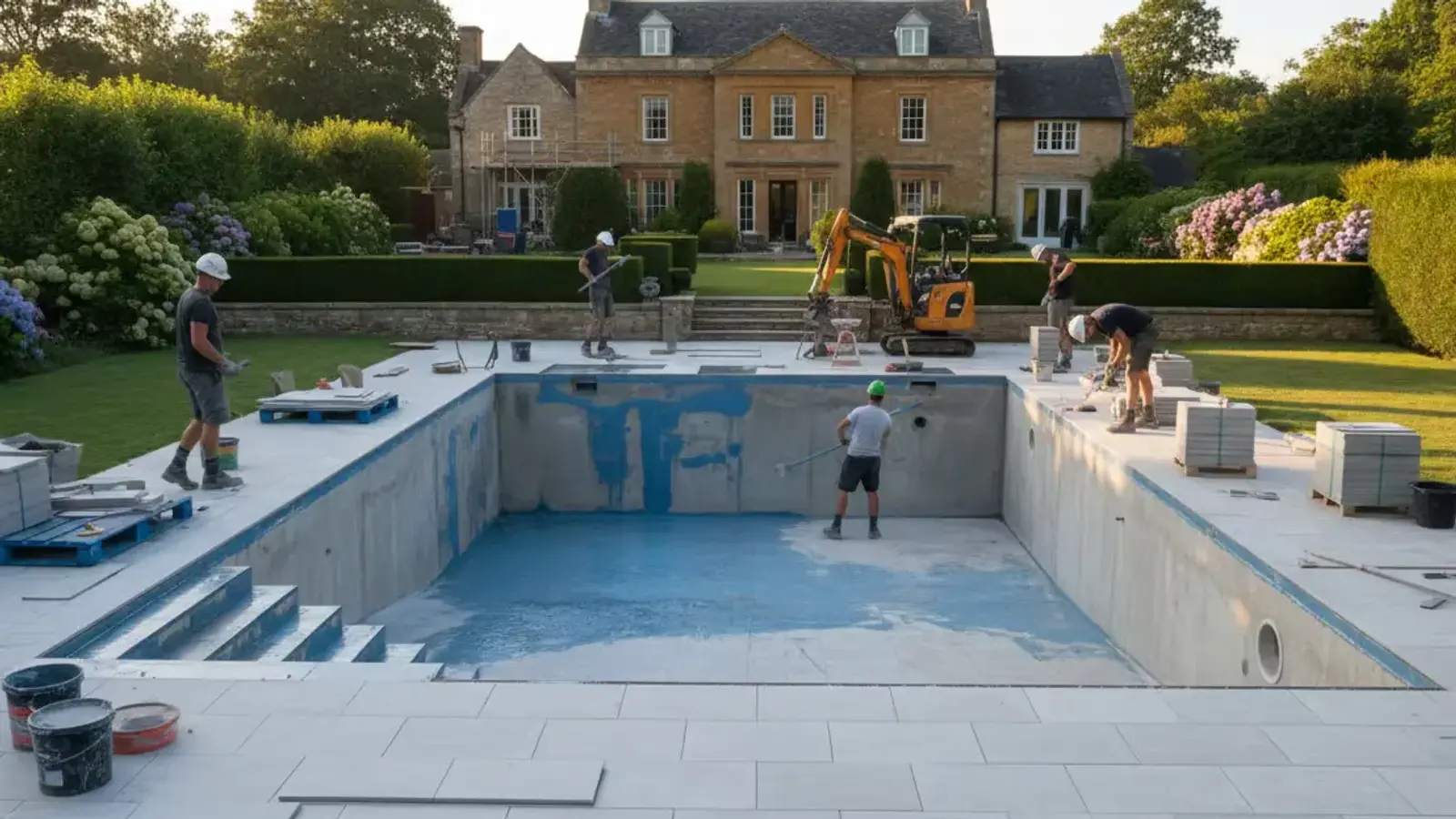
Thinking about installing a swimming pool? Here's why a concrete tiled pool might be the smarter long-term investment.
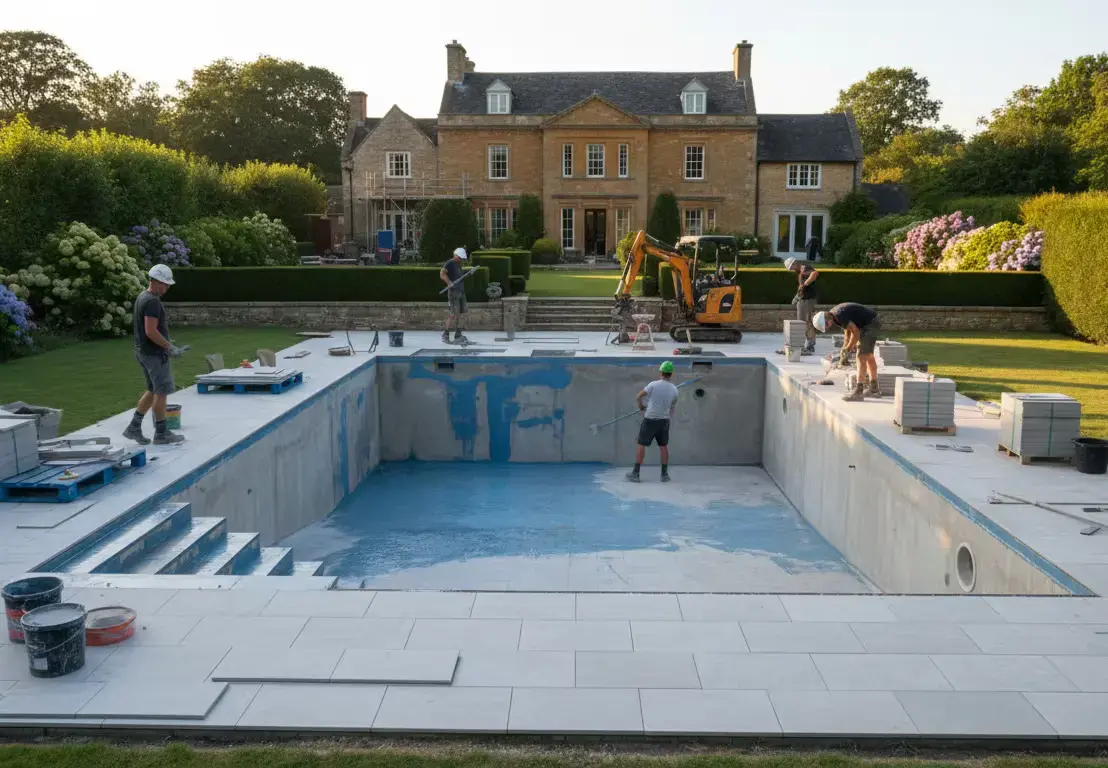
Introduction
When it comes to choosing a swimming pool, homeowners are often faced with a key decision: concrete or liner? While liner pools may seem attractive due to their lower upfront cost, concrete pools offer a host of advantages that make them the superior choice for those seeking durability, beauty, and long-term value. In this blog, we explore the key benefits of concrete pools over liner pools.
1. Unmatched Durability
Concrete pools are built to last. A well-constructed concrete pool can easily last 50 years or more with proper maintenance. The structure itself is incredibly robust, able to withstand ground movement, temperature changes, and the test of time. Liner pools, on the other hand, typically require liner replacements every 8 to 12 years. Liners are susceptible to tearing, puncturing, and fading — meaning ongoing replacement costs that quickly add up over the life of the pool.
2. Completely Customisable Design
One of the biggest advantages of concrete pools is the sheer freedom of design. Because concrete is hand-crafted on-site, it can be moulded into virtually any shape, size, or depth you can imagine. Want a freeform lagoon with a beach entry? A lap pool with sharp geometric lines? A pool that wraps around a garden feature? With concrete, it's all possible.
Liner pools are constrained by pre-manufactured shapes and sizes. While there is some variety available, you're ultimately choosing from a catalogue rather than designing from scratch. For homeowners with a specific vision or an unusually shaped garden, concrete is the clear winner.
3. Superior Aesthetics
Concrete pools simply look better. They can be finished with a wide range of materials — from pebble aggregate and glass tiles to smooth plaster and exposed aggregate — giving them a premium, luxurious appearance that liner pools struggle to match. The finish can be customised to complement your garden, home exterior, or personal taste.
Liner pools, even when new, often have a more functional, utilitarian look. Over time, liners can fade, wrinkle, or develop an uneven appearance, detracting from the overall aesthetic of your outdoor space.
4. Long-Term Value and ROI
A concrete pool is a significant investment that adds real value to your property. Estate agents consistently report that a well-maintained concrete pool can increase a home's market value and kerb appeal. Because they are permanent structures built to last decades, they are viewed as desirable features by prospective buyers.
Liner pools, while cheaper initially, can actually deter buyers who anticipate future liner replacement costs and maintenance headaches. The long-term return on investment strongly favours concrete.
5. No Liner Replacement Costs
The ongoing cost of liner replacement is one of the most overlooked expenses of owning a liner pool. A full liner replacement can cost anywhere from £5,000 to £10,000 or more, depending on the size and complexity of the pool. Over 25 years, you might replace the liner two or three times — meaning you've spent a considerable sum just maintaining the pool's finish.
With a concrete tiled pool, the finish is more permanent. While resurfacing is occasionally required (typically every 25 years), it is generally less disruptive and can actually refresh the pool's appearance at the same time.
6. Better for Customisation Over Time
Homeowners' tastes and needs change over time. With a concrete pool, it's relatively straightforward to add features later — such as steps, ledges, water features, lighting, or even extensions. The solid structure provides a reliable base for future modifications.
Liner pools are far less adaptable. Any structural modification risks damaging the liner, and even adding simple features like steps can require a full liner replacement to accommodate the change.
7. Chemical Compatibility
Concrete pools are compatible with a wider range of sanitisation and chemical treatment systems, including saltwater chlorination, ozone systems, and UV systems. The solid surface handles chemical exposure well over time with appropriate maintenance.
Liner pools require more careful chemical management, as imbalanced water chemistry can degrade the liner material, causing it to become brittle, fade, or develop wrinkles prematurely. This limits your options and adds to the complexity of pool maintenance.
Final Thoughts
While liner pools offer an attractive entry-level price point, the long-term costs, aesthetic limitations, and maintenance challenges often make them a less economical choice over time. Concrete pools, by contrast, offer unrivalled durability, design freedom, and lasting value.See ouroutdoor pool pricesfor what a concrete pool costs in London.
If you're investing in a swimming pool, investing in concrete is investing in quality — a pool that will look stunning, stand the test of time, and serve your family for generations to come.
To see how a reinforced concrete pool is actually built, read ourswimming pool installationguide, including the 72-hour pressure test every shell must pass.

When a liner pool can still make sense
A liner pool can suit a tighter budget, a straightforward rectangular shape or a pool that may only be used for a limited number of years. It is quicker to build, and modern liners come in a good range of colours. The trade-off is that liners need replacing periodically and are easier to damage than a tiled concrete finish.

Questions to ask before you choose
How long do you plan to stay in the house?
Do you want a bespoke shape, edge or finish?
Will the pool be indoors, in a basement or on a difficult site?
What is your budget for the build and for future refurbishment?
Frequently asked questions
Is a concrete pool better than a liner pool?
For a bespoke, long-life pool, usually yes: concrete allows any shape, edge and finish and is built to last decades. A liner pool costs less upfront and is quicker to build, but the liner needs replacing periodically.
How much more does a concrete pool cost?
Our outdoor liner pools start from £45,000 and outdoor concrete pools from £60,000, both before VAT, depending on size and design.
How long does a pool liner last?
It depends on the liner, water care and use, but liners are replaced periodically over a pool's life, which adds to the long-term cost.
Can you tile a liner pool?
No. A liner pool's finish is the liner itself. A tiled finish needs a rigid, waterproofed shell such as reinforced concrete.
Which is better for a basement or indoor pool?
Reinforced concrete is generally the better choice below ground and indoors, where the structure, waterproofing and finishes must be designed together.
Related guides:concrete swimming pool construction in London·swimming pool prices·outdoor pool planning guide
Every pool we build is reinforced concrete. Read more about ourswimming pool construction in Londonand our approach toresidential pool construction in London.
See examples of concreteoutdoor swimming poolswe have built in London and the South East.
Related guide:Swimming pool design trends for 2026
Planning your budget? Ourindoor pool pricesare updated for 2026, and every quote is itemised.The Swimming Pool Companyhas built bespoke concrete pools across London since 2011.
